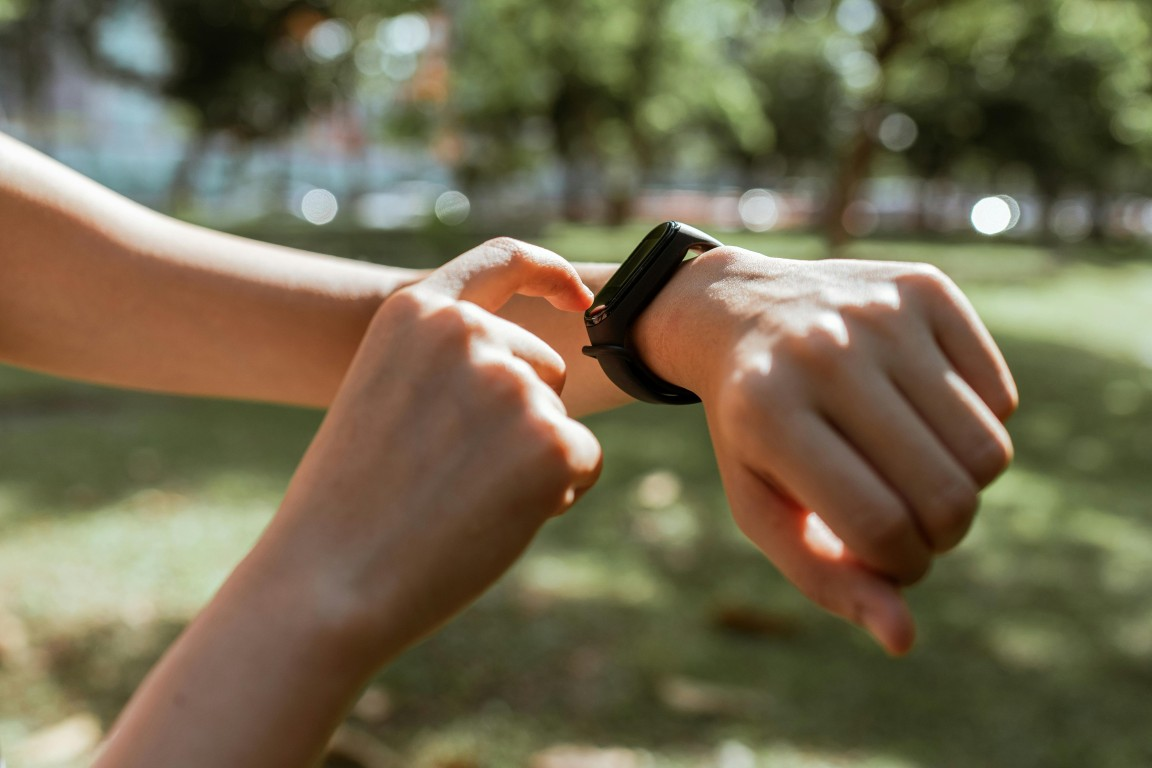
Wearable Accuracy Matters Less Than You Think
Your wearable isn’t perfect. That’s fine.
Fitness trackers — smartwatches, rings, chest straps — all put out numbers that drift. An inaccurate wearable still benefits your health if you know how to use it. A 2022 systematic review in the Journal of Medical Internet Research looked at wrist-worn activity trackers from brands including Fitbit and Apple Watch and found real accuracy gaps, especially for energy expenditure (review details). But they’re still useful tools for discovery and motivation. If you’re waiting for perfect data before you start training smarter, you’re waiting for nothing. That same trend data can help you know when you’re ready to push into higher-intensity work like explosive power training.
Inaccurate wearables still benefit your fitness and health when you read them for trends over time instead of trusting any single number.
Why Wearables Miss the Mark
Most wearables use optical sensors that shine light into your skin to detect blood volume changes. That technology has been in consumer devices for close to a decade, and it works well under ideal conditions: steady arm position, consistent skin tone, no motion. Real life rarely offers those conditions.
Heart rate variability, sleep staging, and calorie burn estimates are educated guesses from algorithms trained on limited populations. That same 2022 JMIR review found energy-expenditure error exceeded 30% across every brand tested — the weakest metric of all the ones studied (review details). Sleep staging is similarly shaky: a 2023 JMIR mHealth validation study tested 11 consumer sleep trackers against clinical polysomnography and found accuracy for REM and deep sleep varied widely by device, with even the best performers only moderately agreeing with the lab results (study details). Total sleep duration tends to be more reliable than sleep stage breakdowns.
Consistency and direction matter more than lab-grade precision here.
The Trend Matters More Than the Number
A wearable acts like a coach with decent vision but occasional blindness: good at spotting patterns, weak at exact numbers.
The exact calorie count matters less than the trend — are you burning more than yesterday, last week, last month? The absolute number might be off by a few hundred calories. The direction is usually right, and that direction is what’s actionable: whether your training volume is climbing, your recovery is improving, or your sleep is getting worse.
A wearable’s real value is the behavioral nudge that comes from consistently seeing your own data.
A rising resting heart rate over three days straight is a signal to ease off or check your sleep. A drop in heart rate variability points to building stress or fatigue. These signals are rough, but they work as early warnings that push you toward smarter decisions — worth more than pixel-perfect data you’d never act on anyway.
Where Accuracy Actually Matters
Not all wearable data is equally trustworthy. Here’s how the main metrics stack up.
- Activity recognition: Relatively solid. Your watch reliably tells the difference between walking, running, and sitting.
- Heart rate trends: Decent for spotting patterns, less reliable for exact numbers during intense exercise when your arm moves.
- Sleep stages: Notoriously unreliable, per the 2023 JMIR mHealth validation study above — total sleep duration is usually accurate, but stage breakdowns are rough estimates at best.
- Stress scores: Highly subjective, derived from heart rate variability with heavy algorithm bias. More useful as a relative snapshot than an absolute measure.
Know the weak spots. Treat sleep staging as a rough guide and a stress score as a flag to watch — not a clinical diagnosis.
How to Get Real Value from Imperfect Data
Use your wearable for what it’s actually good at: building awareness and spotting your own patterns. Cross-check it when it matters. If your watch says you slept poorly but you feel rested, trust yourself. If it says your heart rate is 200 while you’re sitting on the couch, ignore it. If it shows a steady upward trend in resting heart rate over two weeks, that’s worth investigating.
The best wearables make you pay attention. They catch what you’d otherwise miss, remind you to move, and mark your wins — and imperfect data that drives action beats perfect data you ignore.
A wearable’s job is making you a smarter observer of your own body — leave diagnosis to your doctor. For that job, consistency beats precision.
The one habit worth building this week: pick a single metric — resting heart rate, sleep duration, or daily steps — and check its trend over seven days instead of obsessing over today’s number.
If you know someone who just returned a smartwatch because “it’s always wrong,” send them this: the number doesn’t have to be right for the habit to work.
For more on getting real value from your health data, visit our health and nutrition hub.
This is not medical advice. The information on this page is for general education and reflects publicly available research as of the date noted on the article — it is not a substitute for a diagnosis, treatment plan, or guidance from your own doctor or a qualified healthcare provider. Individual health circumstances vary widely; what applies to the research or examples discussed here may not apply to you. Talk to a healthcare professional before making changes to medication, diet, exercise, or supplement use, especially if you have an existing condition or take prescription medication.