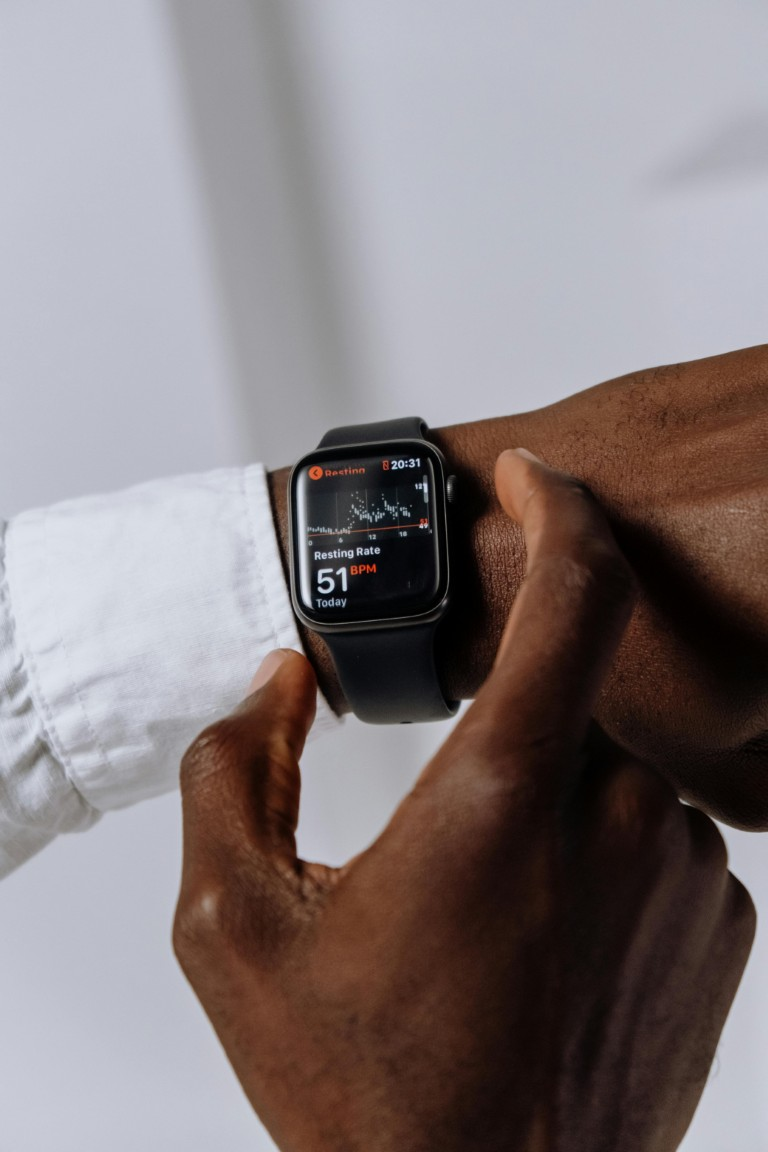
Which Metrics Matter the Most
Everyone has the same excuses: “I know I’m getting enough sleep.” “My workouts are solid.” “I can feel when I’m stressed.” More often than not, you’re wrong. You cannot properly manage what you do not measure. Human perception is bad at precision, plain and simple. That’s where wearables come in. When you start using wearables for tracking your health metrics, you stop guessing and start knowing. And that shift from assumption to data changes everything.
Wearables give you real-time feedback on the areas that matter most — fitness, sleep, stress, and recovery. You can’t improve what you can’t see, and you can’t build sustainable habits without evidence.
Wearables transform vague health goals into measurable data, giving you the feedback loop you need to actually improve.
Why Your Gut Feeling Is Usually Off
Plenty of people assume they’re sleeping 7-8 hours a night because they go to bed, wake up, and feel fine. Put a sleep tracker on, and the real number is often closer to 5 hours, broken up by constant micro-awakenings — which explains the 3 PM fog.
A 2023 study in Annals of Medicine found real disagreement between device-measured and self-reported sleep in adults — people are notoriously bad at estimating their own sleep quality and duration. The same applies to stress levels, calorie burn, and workout intensity. Our brains default to narrative over measurement; wearables cut through that and show you what’s actually happening.
The moment you can see the data, you can make informed decisions. You spot patterns you’d otherwise miss: the coffee you drank at 2 PM kills your sleep, Tuesday workouts aren’t as intense as Monday’s, or stress spikes on specific days. That’s gold.
Four Reasons to Start Tracking Your Health Data Today
1. Real-Time Biofeedback During Workouts
A good wearable shows heart rate zones, cadence, and effort in real time. No more guessing whether you’re actually hitting your target intensity. You can adjust mid-workout, ensuring every rep counts.
2. Objective Sleep Data Changes Your Recovery Game
Sleep tracking reveals REM, light, and deep sleep stages. Once you know your baseline, you can experiment: Does magnesium help? What bedtime actually works? The data answers questions your gut can’t.
3. Stress Monitoring Catches Problems Before They Spiral
Heart rate variability (HRV) is one of the best markers of nervous system stress. When you see your HRV dropping, you get early warning that life is catching up with you—before burnout hits.
4. Accountability and Personalized Feedback
Seeing your steps, calorie burn, or workout streak builds motivation through simple visibility — you see progress, and that breeds consistency. Some trackers also sync with nutrition apps, showing how certain foods affect your energy, digestion, and sleep, so you find out whether that “healthy” choice actually works for your body.
The moment you can see the data, you can make informed decisions and spot patterns you’d otherwise miss completely.
What to Measure and Why
You don’t need to track everything. Focus on what matters to your goals. Training for strength? Prioritize workout metrics and recovery data. Dealing with stress or poor sleep? Sleep stages and HRV matter most. Running a demanding job? Activity and stress tracking become your early warning system.
Start with three metrics: sleep duration and quality, daily movement/activity, and heart rate recovery after workouts. Those three alone will give you most of the insight you need. Add stress (HRV) if mental performance is a concern.
A meta-review of behavior-change techniques for eating, activity, and weight loss found self-monitoring is consistently one of the strongest single techniques for sticking to a health goal. The act of measurement itself creates behavior change.
The Hard Part: Acting on What You Learn
Collecting data is half the battle. The other half is actually changing behavior based on what you see. If your tracker shows you’re averaging 5 hours of sleep, and you know 7 is your target, something has to give. That might mean cutting late-night work, moving your workout earlier, or accepting that your current schedule isn’t sustainable.
Data without action is just noise — pairing it with real commitment is what actually moves the needle.
Start small. Pick one wearable that fits your life and budget—it doesn’t need to be expensive. Wear it consistently for 4-6 weeks to establish your baseline. Then review the data and ask: What’s one behavior I can change based on this information? That’s your next experiment.
Wearables just reflect what’s already happening in your body, and most of us need to see that clearly before we can change it.
Ready to stop guessing about your health? Explore Making The Most for research-backed fitness, nutrition, and recovery strategies that actually stick. Build your foundation on data instead of guesswork.