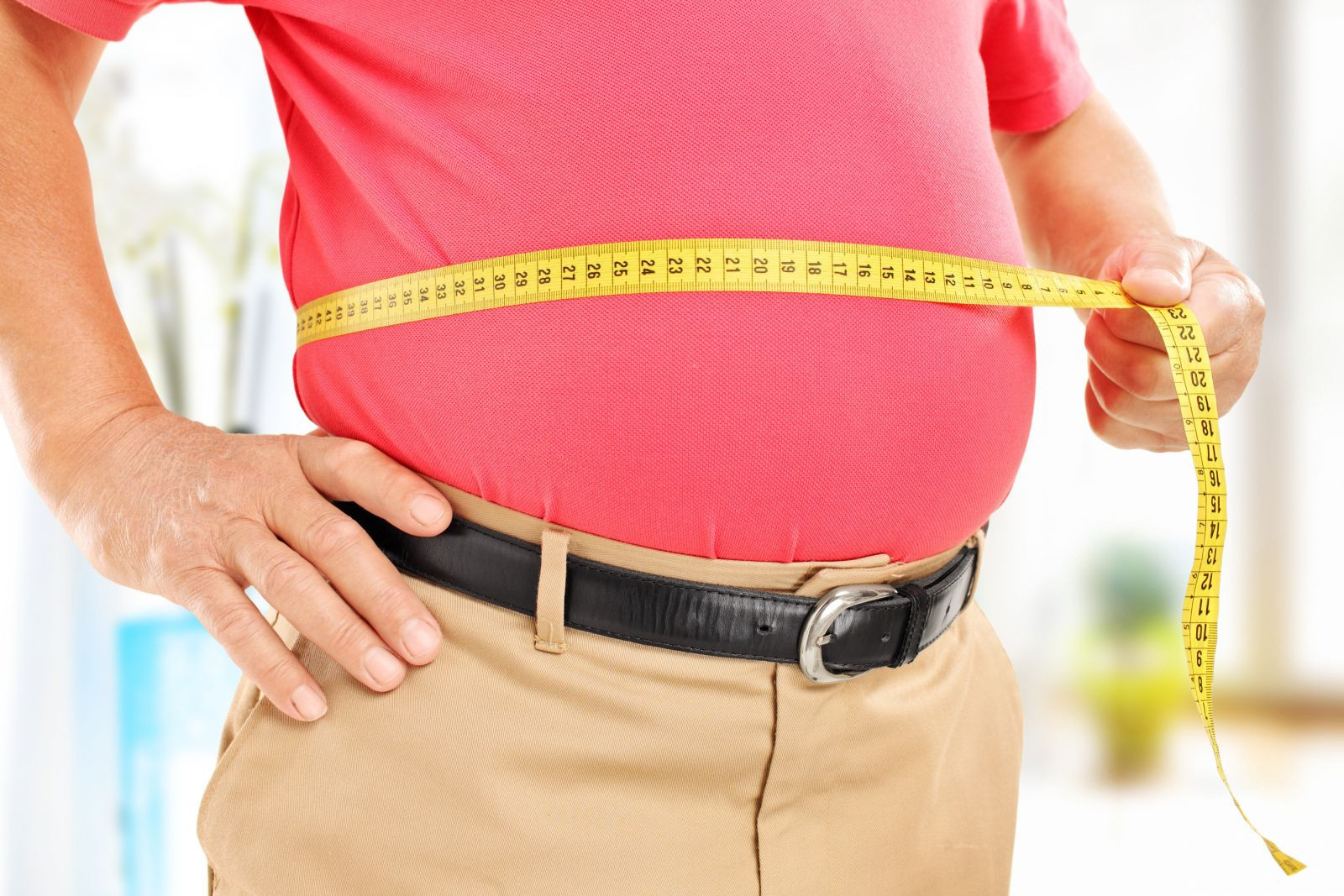
Are you spending a thousand dollars a month to lose weight? Make sure you are losing the right kind.
The number on the scale is going down. What the scale cannot tell you is whether you are losing fat, muscle, or both — and on a GLP-1 drug without a specific counter-protocol, the research says you are losing a substantial amount of both. The fix exists, it has real numbers attached to it, and almost nobody is hearing it before they fill the first prescription.
The Composition Problem Nobody Mentions at the Pharmacy
Weight loss is two things happening simultaneously in some ratio: fat loss and lean mass loss. That ratio is what determines your health ten years from now, and it is not what most prescribing conversations are about.
Here is the data worth knowing before you start. The STEP 1 body composition analysis found that 40% of total weight lost came from lean mass without intervention. The SURMOUNT-1 trial on tirzepatide came in at 26%. Across GLP-1 data broadly, the range sits at 15–40% of total weight loss coming from muscle. At higher doses, patients are losing 10–15% of their total body weight as lean mass.
Lean mass governs resting metabolic rate (how many calories your body burns just to stay alive), insulin sensitivity (how efficiently your cells process blood sugar), fall risk, and functional independence in your 60s and 70s. The mechanism behind the loss is straightforward: GLP-1 drugs suppress appetite so effectively that total calorie intake drops sharply, and protein intake drops with it — at the exact moment the body needs dramatically more protein to protect muscle tissue during a deficit. Catabolic hormonal shifts compound that — lower insulin and higher glucagon during aggressive caloric restriction signal the body to break down muscle for energy.
Some clinicians frame this as “it happens with any diet,” and that is technically accurate. My read is that it is also practically misleading. The caloric suppression these drugs produce is larger in magnitude than most people sustain voluntarily on any diet, which means the lean mass losses are proportionally larger too. Saying it is the same problem without that proportion attached leaves patients with a false sense of scale.
Losing 40% of your weight reduction as lean mass is not a cosmetic footnote. Muscle is what keeps you out of a wheelchair at 75, and the drug is quietly taking it while the scale tells you everything is going according to plan.
What “Under 10%” Actually Requires — The Protocol in Plain Terms
A 2025 joint advisory from four professional societies, backed by an international consensus panel, landed on two non-negotiable interventions: protein intake of 1.2–1.6 g/kg of body weight per day, and resistance training 2–3 times per week. That combination pushes lean mass loss below 10%.
For a 200-pound (90 kg) person, that means 108–144 grams of protein daily — roughly four to five chicken breasts. The standard recommendation is 0.8 g/kg, which works out to about 72 grams for the same person. This protocol runs 50–100% above that baseline.
The 20–30 gram per meal minimum is the threshold for triggering muscle protein synthesis — the process by which the body actually builds or holds onto muscle tissue. Loading all your protein at dinner does not work; every sitting counts. This matters especially because GLP-1 appetite suppression is strongest in the morning, and patients who skip breakfast protein because they are not hungry are missing the most structurally important meal for muscle preservation.
On the training side: resistance training means compound movements with progressive overload — squats, deadlifts, rows, chest press. Walking and cycling preserve cardiovascular fitness, which is worth doing, but they do not provide the mechanical stimulus that tells the body to hold onto lean mass during a deficit. The research specifies frequency and movement pattern, not location. Adjustable dumbbells and a bench cover the major compound patterns: goblet squats, Romanian deadlifts, dumbbell rows, chest press — 3 sets of 8–12 reps per movement, 2–3 days per week.
The Daily Tension: Appetite Suppression Versus Protein Targets
The drug suppresses hunger. Hitting 108–144 grams of protein daily requires eating when you are not hungry, with foods dense enough to deliver 20–30 grams per sitting without filling your stomach before the protein arrives. That tension is the central daily management problem of GLP-1 therapy, and it is rarely addressed before the first prescription is filled.
Where I would start on the food side: build two anchor meals around budget-accessible, protein-dense sources. Cottage cheese delivers 28 grams per cup at roughly $0.80 per serving. Canned tuna or salmon runs 25–30 grams per can. Eggs contribute 6 grams each and are cheap by volume. A rotisserie chicken half-breast adds about 35 grams. Two of three meals structured around those anchors can hit the protein floor without requiring supplement spending.
Greek yogurt (17–20 g per cup) and edamame (17 g per cup) fill in variety without wrecking a grocery budget. When whole-food targets become unreachable because appetite suppression is too strong, a mid-range whey or casein protein supplement closes the gap — budget $40–70 per month at 30–50 supplemental grams daily.
One practical framing that helps: track your protein total by noon, not by end of day. If you are short at midday, a single whey shake before dinner closes the gap without fighting a full stomach. Waiting until 8 PM to realize you have 80 grams left to eat is a structural problem, not a discipline problem.
The Training Problem: How to Lift When the Drug Has You Running on Empty
GLP-1-related fatigue during early months of therapy is common and collides directly with the 2–3 weekly training sessions the research identifies as non-negotiable. Plan for that friction before it derails the protocol.
Morning sessions have a practical advantage for this population that goes beyond preference. If the training is not done before afternoon energy drops — which is earlier and steeper on a significant caloric deficit — it frequently does not happen. Get it on the calendar before fatigue makes it feel optional, because it will feel optional by 3 PM most days.
A realistic two-day minimum program for someone eating in a significant deficit: Day 1 — goblet squats (3×10), dumbbell Romanian deadlifts (3×10), seated dumbbell rows (3×12). Day 2 — dumbbell chest press (3×10), dumbbell shoulder press (3×10), step-ups or single-leg deadlifts (3×10 each side). Progressive overload means adding 2.5–5 lbs or one additional rep per movement every one to two weeks — that incremental increase is what signals the body to retain lean tissue.
A trial known as LEAN-PREP is now underway, randomizing GLP-1 patients into resistance-training and protein-supplementation arms specifically to measure lean-mass outcomes. Results are years away, but the intervention it is testing is the same one described above. Patients building the habit now are ahead of where clinical workflows will eventually land. Accountability structure helps considerably — a training partner, a standing class time, or a coach check-in. Managing drug adaptation, caloric restriction fatigue, and a new training requirement simultaneously has a high dropout rate without external structure.
Who Is Most at Risk — and Where the Standard Protocol Is Not Enough
Sarcopenia — age-related muscle loss that accelerates after 50 — is already underway in older adults before they start a GLP-1. Adding aggressive caloric suppression on top of that baseline creates a compounding problem. Postmenopausal women and adults over 60 are the highest-risk group, and the 1.2–1.6 g/kg protocol with 2–3 weekly sessions is a floor for that population, not a complete plan. More intensive supervision — a registered dietitian, an exercise physiologist or physical therapist — is what “doing this correctly” actually looks like at that life stage.
Consider a 170-pound 70-year-old woman at a higher GLP-1 dose. At 10% lean mass loss, that is roughly 17 pounds of muscle — enough to shift fall risk, grip strength, and the ability to get up from a chair independently. Those are not theoretical outcomes; they are what undertreated lean mass loss produces at that baseline.
Individuals who were not already doing resistance training before starting GLP-1 therapy face the highest coordination challenge: learning a new exercise modality, adapting to a new medication, and eating in a significant caloric deficit at the same time. That is three simultaneous behavior changes, and failure rates without structured support are high. Joint pain, back problems, and limited mobility are common in this population and require exercise modifications, not exercise avoidance. A physical therapist consult to build compound patterns around existing limitations is a targeted spend with a clear return.
Tracking What Actually Matters — Body Composition, Not Just the Scale
A scale measures total weight. Without body composition tracking, a patient who has lost 20 pounds in 12 weeks genuinely does not know what they lost. DXA — dual-energy X-ray absorptiometry, a scan that uses low-dose X-rays to distinguish fat tissue from lean tissue and bone — is the gold standard. It runs $50–150 depending on your market and provider. A baseline scan before starting GLP-1 therapy, then every 12 weeks, is the tracking interval the research supports.
Bioelectrical impedance analysis (BIA — estimates body composition by running a small electrical current through the body and measuring resistance) is available in gym scales and home devices like Withings or InBody, which run $100–200. Less precise than DXA but sufficient for trend-tracking between clinical scans and useful for weekly data.
Functional signals precede any lab confirmation: increasing difficulty with stairs, reduced grip strength, fatigue that exceeds what a caloric deficit would explain. Do not wait for a scan to confirm what your body is already signaling. On the emerging technology side, continuous biosensors that detect phenylalanine — a biomarker for active muscle breakdown, with a detection threshold around 4 µM/L, stable for about 7 days — are in development but not yet in clinical use or covered by any payer. Worth watching; not a current action item. Bimagrumab combined with semaglutide in Phase 2b trials is showing early potential to preserve or increase lean mass alongside fat loss — patients building the training and protein habits now will be positioned to layer in those tools when they reach clinical practice.
The Full Cost of Doing This Correctly — What to Budget Before You Start
GLP-1 drugs run $900–1,300 per month without insurance coverage. That drug cost does not constitute the complete intervention, and most prescribing workflows treat it as if it does.
What moves from optional to necessary if you are serious about lean mass: a DXA scan at baseline and quarterly ($150–600 per year at $50–150 per scan), a registered dietitian consult to build a protein-forward meal structure that works within the appetite suppression window ($100–250 for an initial session, often one-time or quarterly), and resistance equipment or gym access ($200–600 one-time for adjustable dumbbells and a bench, or $30–60 per month for a facility). Protein supplements if whole-food sources cannot close the gap add another $40–70 per month.
The highest-return single spend for most patients is one session with a registered dietitian who has GLP-1 experience — someone who can map the 1.2–1.6 g/kg target onto your actual food preferences, budget, and appetite window. That $100–250 investment resolves the primary daily management problem that otherwise compounds for months.
Here is how I would prioritize the spending: protein targets first, since that is food costs with no additional fees. Resistance training second — home equipment or a gym, minimal barrier. DXA baseline third, as a one-time data point before you start. Dietitian consult fourth if the protein math is not working on its own. Biosensors and experimental combinations are last — interesting, not actionable yet.
The drugs work exactly as designed, which is precisely why the lean mass problem is as large as it is. Aggressive appetite suppression at the scale these medications produce creates losses that exceed what most voluntary diets ever generate — and the counter-protocol is specific, measurable, and available right now. Get a body composition baseline before you start. Hit the protein floor at every meal rather than in aggregate. Get the resistance training on the calendar before fatigue makes it feel optional. Treat the monitoring as part of the prescription, because the scale alone is not telling you the full story.
Small changes compound. Find more practical strategies at makingthemost.us, or reach out if you want a plan built around your actual life.