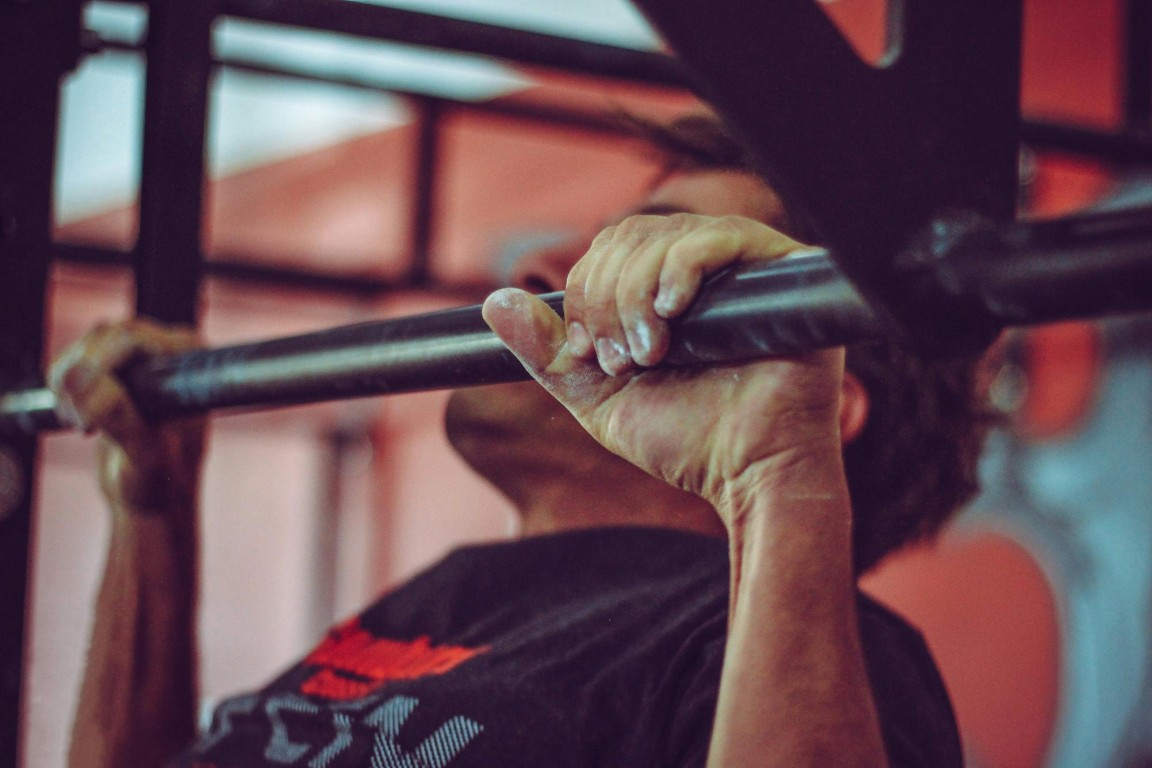
You don’t need to be able to do a pull-up to benefit from a pull-up bar. In fact, one of the simplest yet most overlooked tools in fitness is just hanging there—literally. The benefits of hanging from a pullup bar go far beyond grip strength, and it’s something you can start doing today, regardless of your fitness level.
Years of desk work and inconsistent training can leave your shoulders tight, your grip strength lagging, and your core disconnected from your upper body. Adding dead hangs—plain, simple hanging—into a routine can fix more than you’d expect. Let me break down what the research shows and how you can use it.
Dead hangs from a pullup bar improve grip strength, shoulder mobility, and spinal decompression—no prior fitness level required. Pairing dead hangs with explosive power training can help men over 45 stay functional and injury-resistant.
What Happens When You Just Hang
A dead hang is exactly what it sounds like: you grab a pull-up bar and hang under your own body weight. No movement. No reps. Just you and gravity.
When you hang, several things happen at once:
- Grip muscles activate. Your forearms, fingers, and hand stabilizers work hard to keep you suspended. It’s active muscle engagement, not passive stretching.
- Shoulders lengthen. The weight of your body creates traction through your shoulder joints, which can ease tightness from pulling, pushing, and computer work.
- Spine decompresses. Hours of sitting compress your vertebrae. Hanging creates space between them, which can reduce low-back tension and improve posture.
- Your core stabilizes. Even though you’re not moving, your core muscles fire to keep your body stable and prevent excessive swinging.
Hanging from a pullup bar creates traction through your shoulder joints and decompresses your spine—benefits that build whether or not you ever do a full pull-up.
Grip Strength: The Foundation Most People Skip
Let’s talk about grip strength, because it’s more important than most people realize. Research shows that grip strength predicts cause-specific mortality and overall functional ability as you age.
A dead hang is one of the most efficient ways to build it. Unlike fancy grip trainers or expensive equipment, a pull-up bar costs nothing if you already have one, and it works your entire grip system—intrinsic hand muscles, forearm flexors, and stabilizer muscles in your wrist.
Even 20-30 seconds of hanging, 3-4 times per week, can produce noticeable improvements within 2-3 weeks for most people. Your grip gets stronger, and everyday tasks—opening jars, carrying groceries, working with tools—feel easier.
Shoulder Health and Mobility
If you train hard or sit for work (or both), your shoulders are probably tight. Bench pressing, overhead work, typing, and even sleeping can tighten the shoulder joint.
Hanging addresses this directly. Cleveland Clinic notes that shoulder impingement is almost always an overuse injury from repetitive stress, and traction-based movements like hanging can decompress the joint and reduce pain.
After a heavy pressing session, a few sets of 20-30 second hangs can make shoulders feel substantially better. It’s not a substitute for proper mobility work, but it’s a powerful complement.
How to Start: Dead Hang Protocol
Pick a grip width. Shoulder-width is neutral. Wider grips emphasize lats; closer grips hit forearms harder.
Start small. If you’re new to hanging, shoot for 15-20 seconds per set. Don’t max out your grip on day one.
Aim for 3-4 sets, 2-4 times per week. Rest 60-90 seconds between sets. Your grip needs recovery time.
Increase duration, not intensity. As you adapt, add 5-10 seconds per week until you hit 45-60 seconds per hang. That’s plenty for most benefits.
Make it a habit. The best way to stay consistent? Hang after your workout when you’re already at the bar. It takes 2 minutes and requires zero motivation.
The Takeaway
You don’t need to earn your place at the pull-up bar. Just hanging from it—no pull-ups, no movement, no ego—delivers real benefits: stronger grip, better shoulder mobility, spinal decompression, and improved core stability. It’s one of the most underrated tools in fitness because it looks too simple to work.
Add it to your routine this week. You’ll feel the difference faster than you’d expect.
Ready to build a training program that works? Explore Making The Most for research-backed fitness and nutrition strategies designed for real life. Tracking your hang times and set counts each week is a simple way to apply the metrics that matter for reaching your goals.
This is not medical advice. The information on this page is for general education and reflects publicly available research as of the date noted on the article — it is not a substitute for a diagnosis, treatment plan, or guidance from your own doctor or a qualified healthcare provider. Individual health circumstances vary widely; what applies to the research or examples discussed here may not apply to you. Talk to a healthcare professional before making changes to medication, diet, exercise, or supplement use, especially if you have an existing condition or take prescription medication.